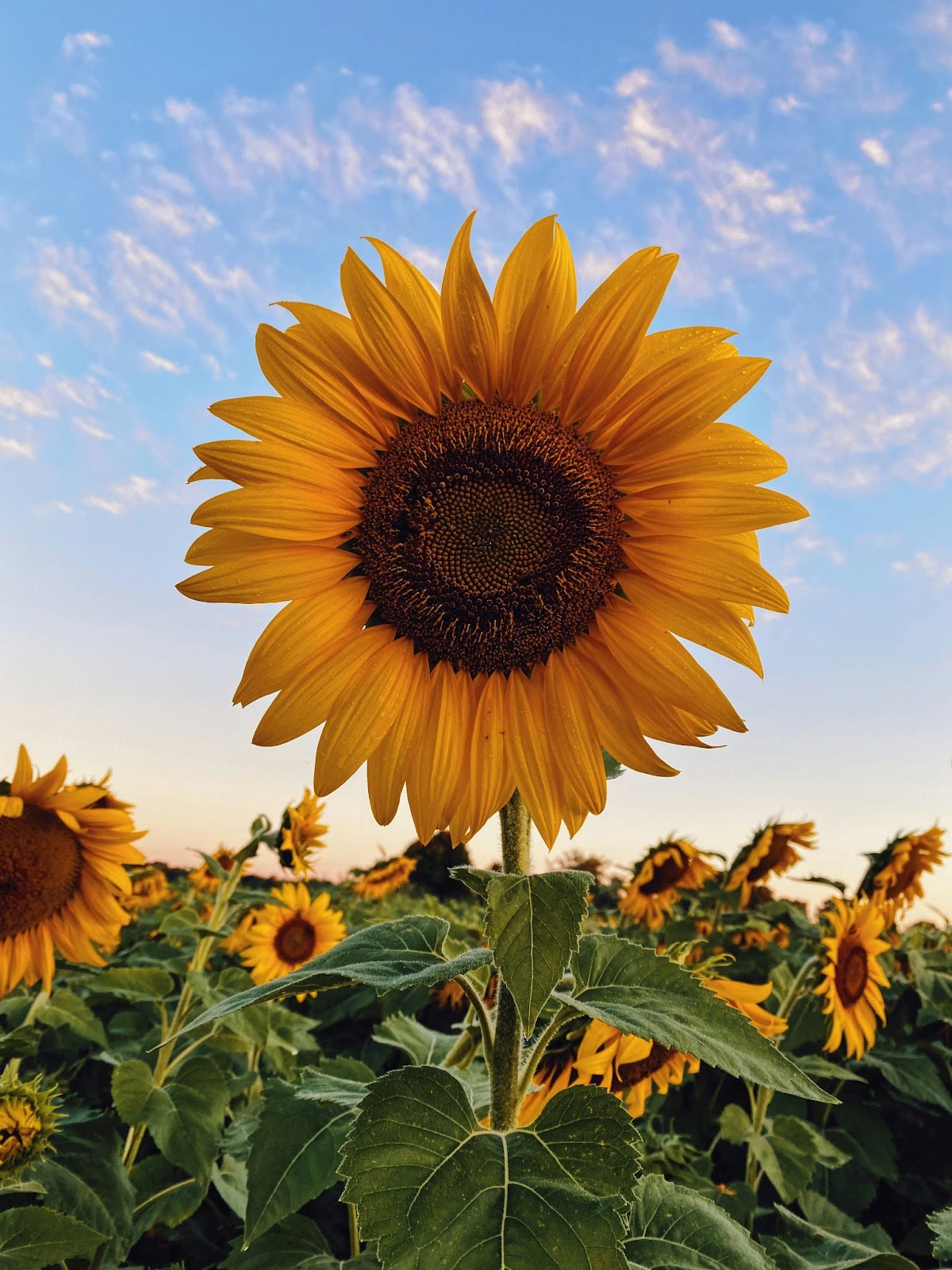
Flower of the Week
Edition 04
Hello Everyone :D My name is Anya Valentine, and in this blog, called Flower of the Week, we will talk about different flowers. Throughout this, I will explain a bit about each flower. Shall we see what today’s flower is?
Origin
Sunflowers originated around 1000 BC in the Americas, primarily in what is now Arizona and New Mexico, and were used for a wide variety of purposes. They were first cultivated as a food source, with early Americans crushing the seeds into flour for bread. The seeds were also eaten as a quick snack or mixed in with other oats and grains to make a type of granola.
Sunflowers weren’t just used for food. When the Americans discovered how to extract oil for cooking, they also started using it for their skin and hair, as it’s rich in vitamins. And the stalk would often be used as a building material.
Sunflowers grew super popular across Europe, Russia, and Ukraine in the 1700s as the Russian Orthodox Church banned all foods containing oil during Lent. Except sunflowers. As sunflower oil was permitted, people became obsessed with the flower, and by the early 19th century, Russian farmers had grown over 2 million acres of sunflowers.
Symbolic Meanings
Sunflowers symbolise loyalty and adoration, thanks to the myth of Clytie and Apollo. And, because of their association with the sun, sunflowers are well-known for being happy flowers.
But they actually have different meanings across cultures. In China, sunflowers symbolise long life, vitality and good luck. And to Native Americans, sunflowers symbolised harvest and provision. Basically, no matter where you are, sunflowers are a positive flower that brings joy to many.
Types of sunflowers
- Giant Sunflowers: These are super tall, reaching heights of 3 to 4.5 metres. They have massive flower heads that can measure over 30 centimetres in diameter.
- Dwarf Sunflowers: These are the shorter versions of sunflowers, standing at around 30 to 90 centimetres in height. They often produce multiple flower heads, perfect to satisfy your sunflower cravings.
- Teddy Bear Sunflowers: Now, these sunflowers have fluffy, double flowers that look like pom-poms or cute teddy bear faces. They're on the compact side, growing to about 60-90 centimetres tall.
- Multi-Branched Sunflowers: These sunflowers are overachievers in the best way. They produce multiple flower heads on each stem, giving you a fuller and more abundant display of blooms.
- Pollen-Free Sunflowers: If you have pollen allergies, these sunflowers are your heroes. They've been specially bred to produce little to no pollen, so you can enjoy their beauty without the sneezes. They're often called "pollenless" or "allergy-friendly" sunflowers.
Interview Time
Today, we have the wonderful Elias Day here to answer some questions. :D
Anya: What do sunflowers mean to you?
Elias: Sunflowers mean positivity and also grief, not for me but I use them as a motif for death, for decay, for grieving and forgetting, i’m writing something where a character asks another to leave sunflowers at her grave.
Anya: Is there anyone in your life who you would say is like a sunflower?
Elias: I would call my irl best friend a sunflower in the sense that she is genuinely the nicest person ever, she’s my wife (platonically) and i value her greatly.
Anya: If a sunflower could speak, what would it say?
Elias: The sunflowers are telling me that there are better ways to figure out if they want me.
Anya: That will be all. Thank youu :D.
If anyone wants to be in the next interview. Send
Anya Valentine, a mail, adding in your name and favourite flower.
Feel free to also comment a flower of your choice below ❤
Love youuu,
Anya Valentine
Coded by Anya | Glitter Queen