Flower of the Week
Edition 08
Hello Everyone :D My name is Anya Valentine, and in this blog, called
Flower of the Week, we will talk about different flowers. Throughout
this, I will explain a bit about each flower. Shall we see what
today’s flower is?
Origin
Lavender is known for its beautifully scented flowers and soothing properties, and for its rich and fascinating history. Lavenders originated in the Mediterranean, the Middle East and India. Its history goes back 2500 years, when lavender was used by ancient civilisations for its therapeutic benefits.
Lavender flowers represent purity, silence, devotion, serenity, grace, and calmness. Purple is the colour of royalty and speaks of elegance, refinement, and luxury, too. The colour is also associated with the crown chakra, the energy centre of higher purpose and spiritual connectivity.
Symbolic Meanings
In Hinduism, the red hibiscus is a flower of immense spiritual importance. It is particularly sacred to the powerful Goddess Kali, the embodiment of divine feminine energy (Shakti). The flower's red colour is said to symbolise her fierce compassion, and its shape is believed to represent her ability to absorb the sorrows and negativity of her devotees. It is also a common offering to Lord Ganesha, the remover of obstacles.
Lavender flowers represent purity, silence, devotion, serenity, grace, and calmness. Purple is the colour of royalty and speaks of elegance, refinement, and luxury, too. The colour is also associated with the crown chakra, the energy centre of higher purpose and spiritual connectivity.
Types of Lavender
- English lavender or common lavender (Lavandula angustifolia) - This 2-foot-high, compact woody plant with spikes of purple, lavender, pink, or white flowers blooms from late spring to midsummer. It is highly fragrant and grows in well-draining soil. English lavender is excellent as a border plant, in rock gardens, and in containers, and it has been a favourite as a low hedge in ornamental gardens since the Renaissance. It is the most commonly cultivated type, and its high-quality aromatic oil is used in perfumes, soaps, sachets, and potpourris, and as a flavouring.
- French lavender (Lavandula dentata) - This species has light flowers with a mild scent and sharply aromatic, toothed leaves. It grows from 30.4 to 91.4 centimetres tall and blooms from spring to fall. It is not a cold-hardy shrub and thrives in warmer climates. French lavender is grown for perfumes, sachets, and potpourris.
- Portuguese or spike lavender (Lavandula latifolia) - Possessing a stronger scent than its English cousin, Portuguese lavender has pale lilac flowers that sway on long stems and bloom from late spring to late summer. The plant grows from 30 cm to 91.4 cm high. The oil from Portuguese lavender is prized for its antibacterial, antifungal, and antiviral properties.
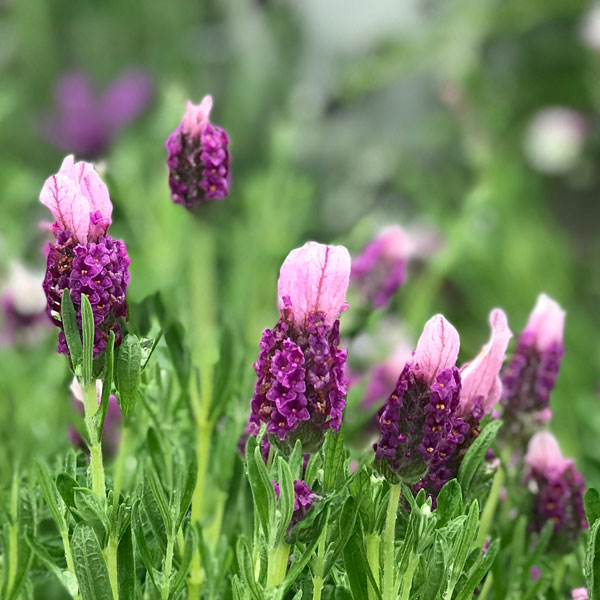
- Spanish lavender (Lavandula stoechas) - This plant is characterised by distinctive white flowers with long petals (ears) that arise from the top of the flower head and fade to pink and deep purple as the plant matures. Only the leaves are fragrant in this species, and they are used for essential oils and potpourris. The plant grows in an 42 cm- to 60 cm high mound and blooms from mid-spring to late summer. It can tolerate more humid summers than English lavender. Spanish lavender is used in mass plantings and in containers, but it's not the best choice for culinary purposes.
- Lavandin (Lavandula × intermedia) - A hybrid of English and Portuguese lavender with strongly fragrant flowers and leaves, lavandin grows in mounds up to 76 cm high and blooms from mid- to late summer in USDA hardiness zones 5 to 9. It is commonly used as a hedge, in rock gardens, and for perfumes and potpourris, but not for cooking.
Feel free to comment a flower of your choice below ❤
Love youuu,
Anya ValentineCoded by Anya | Glitter Queen